How to influence people: The good, the bad, the ugly

Instead of a long build-up where I get you to spend more time reading for better stats, I’ll give you the basic structure right up front.

  1. Find something that someone considers valuable.
  2. Figure out how valuable this something is to that someone.
  3. Understand where that someone spends time and could possibly see this something.
  4. Put the something in front of the someone in a way that connects the dots between the something and the fact that it’s worth the cost to the someone.

If you have marketing experience, you’ll recognize the “4 P’s of Marketing.”

  1. Product
  2. Price
  3. Place
  4. Promotion

Go Marketing! Yay!

Quick exercise

What was the first “something” that came to your mind?
Was it the product or service your current employer offers?
Was it an idea you’ve been wanting to create to start up a new business?
Was it a service or skill you could offer to others in the form of coaching, teaching, or consulting?

I tried the exercise with Caitlin.
Here’s how it went:

Me: “What is something people consider valuable?”
Her: “Boats.”
Me: “Really?!”
Her: “Yeah!”
Me: “Where would someone spend time looking for boats?”
Her: “A lake!”
Me: …
Her: …
Me: “Okay… What would you charge for the boat?”
Her: “I don’t know but I would sell all kinds of boats at a lake. Cheap canoes and other boats.”
Me: “What would you pay for a boat?”
Her: “A million dollars.”
Me: “Uh… no.”
Her: “I am going to sell boats for a million dollars to people at lakes!”

A few takeaways.

  • Caitlin is adorable.
  • Apparently, she’s in the market for a million-dollar boat.
    Let me stop you now. We are not good for it.
    If you sell boats, please do not contact us with a million-dollar boat offer.
  • You’re welcome if you need a new business idea.
  • You can always count on your spouse to intentionally try and throw a wrench in your thought exercises.

What if the product is not a tangible thing

In Caitlin’s case, the product was something tangible. A boat. But let’s move away from tangible products for a bit. Because products don’t have to be something you hold in your hand (or on a trailer).

Take blackmail as an example. Let’s assume someone is blackmailing you.

  1. They have an email/picture/video that puts you in a compromising position (Product).
  2. They put a price on this information that they think/hope you’ll pay to keep it a secret (Price).
  3. They know your email address (Place).
  4. They send you an email with the other email/picture/video, the price you need to pay to keep it quiet, and the consequences if you do or do not send them the money (Promotion).

Let’s try another where your money isn’t the goal.

  1. There is a video of your favorite political figure tackling the latest political issue in an articulate way (Product).
  2. The video is 10 minutes long and packed with great comebacks if you ever get in an argument with someone who holds the opposite viewpoint (Price).
  3. The creator of the video knows that you spend time on Facebook and, based on Facebook’s tracking of your behavior, knows your political preference. They also know that a friend whose Facebook content you interact with often likes the video (Place).
  4. The video crosses your feed with a charged headline and a automatically starts playing with subtitles and a timer so you know what the video is about, how long it lasts, and you know you and your friend can talk about it later (Promotion).

Every interaction has product.

Yes, even this blog post. Products include things you can hold in your hand, services that take work away from you and put it on someone else, or information.

Every product has a cost. Those costs include time, money, energy, thoughts, and emotions. If you’ve made it this far, thank you. You could have spent that time doing something else. I hope this has been worth it… now… keep reading.

For you to influence others (or be influenced by others), the product and its cost must be placed in front of you in a way for you to make a decision as to whether or not that cost is worth it to you right now or in the future.

So much of the world today is pushing for the instant satisfaction and quick alleviation of pain, worry, emptiness, boredom, embarrassment and lack of pleasure at the cost of your time, attention, and ultimately money.

Buyer’s remorse

We’ve all been there. You bought something that at the time seemed a bit too expensive, but it looked so cool!

You were watching your idol on TV destroying his opponent so effortlessly that it looked like poetry in motion. Simply beautiful.

You envisioned yourself playing against that neighbor kid who keeps dismantling you on the tennis court, and the only possible reason that could be happening is because the equipment you are using isn’t the same as your idol’s.

So, you went and bought the same shoes, socks, shorts, shirt, headband, bag, and tennis racket(s) your idol was using as he destroyed his opponent who happened to play just like this kid.

And then, the next day, all decked out in your matching shoes, socks, shirt, headband, rackets, and bag, you proceeded to get destroyed yet again.

It wasn’t the clothes.

It wasn’t the racket.

But for a brief moment the day before, you were convinced that the $500 price tag on that equipment was worth the future victory you would have over Nathan. Now, you desperately want to return some of that stuff. You don’t even look good in a headband!

We’ve ALL been there… right…?

No?

… Yeah, me neither… I was just speaking in generalities…

Okay, maybe you haven’t tried to look like and somehow magically become Roger Federer in an attempt to try and beat Nathan in tennis, but we’ve all had buyer’s remorse in one form or another. Clothes, cars, houses, jewelry, the list goes on forever.

How about wasted time going down the YouTube black hole of recommended videos that seem to read your mind and keep you distracted for hours? What about the Facebook feed that gets you fired up about Black Lives Matter, COVID-19, Trump, sports, or cute kitties?

“…Must…resist…reading…the comments… What?! No way!”
*Start madly typing away to point out your brother’s grammatical error on his uneducated comment.

Was it worth it?

What’s the point?

Great question. I jumped into this and was hoping to figure it out as I went.

I guess the point is, the resources that you are able to exchange (money, time, energy, etc.) are limited. You only get so much of each.

There are a lot of great products, services, and ideas. There are plenty of worthy causes and beneficial places to put your time, talents, money, and energy.

The world is also ripe with filth, garbage, lies, and scams designed to rob you of your resources and direct you away from the more important things in life.

You know what things cause buyer’s remorse for you personally. You know where they typically find their way into your life. Now you know that us marketers are constantly trying to get you to behave a certain way. Don’t let us use those 4 P’s of marketing to distract you (too much).

The products will always exist, you really can’t change what the population of earth will produce, but you can influence how the other 3 P’s affect you.

You can determine what price you are willing to pay for the transaction.  

You can influence the places where you spend time whether physically or digitally.

And you can acknowledge when the promotion is put in front of you, albeit nearly impossible sometimes to resist.

Don’t let the things that are more valuable to you in the long run be traded for the things that seem temporarily valuable in the moment.

I guess that is all I’m hoping to say (and accomplish myself).

Caitlin said I just unintentionally convinced both of us not to get that pickleball court installed in the back yard… I should’ve never gone down this rabbit hole.

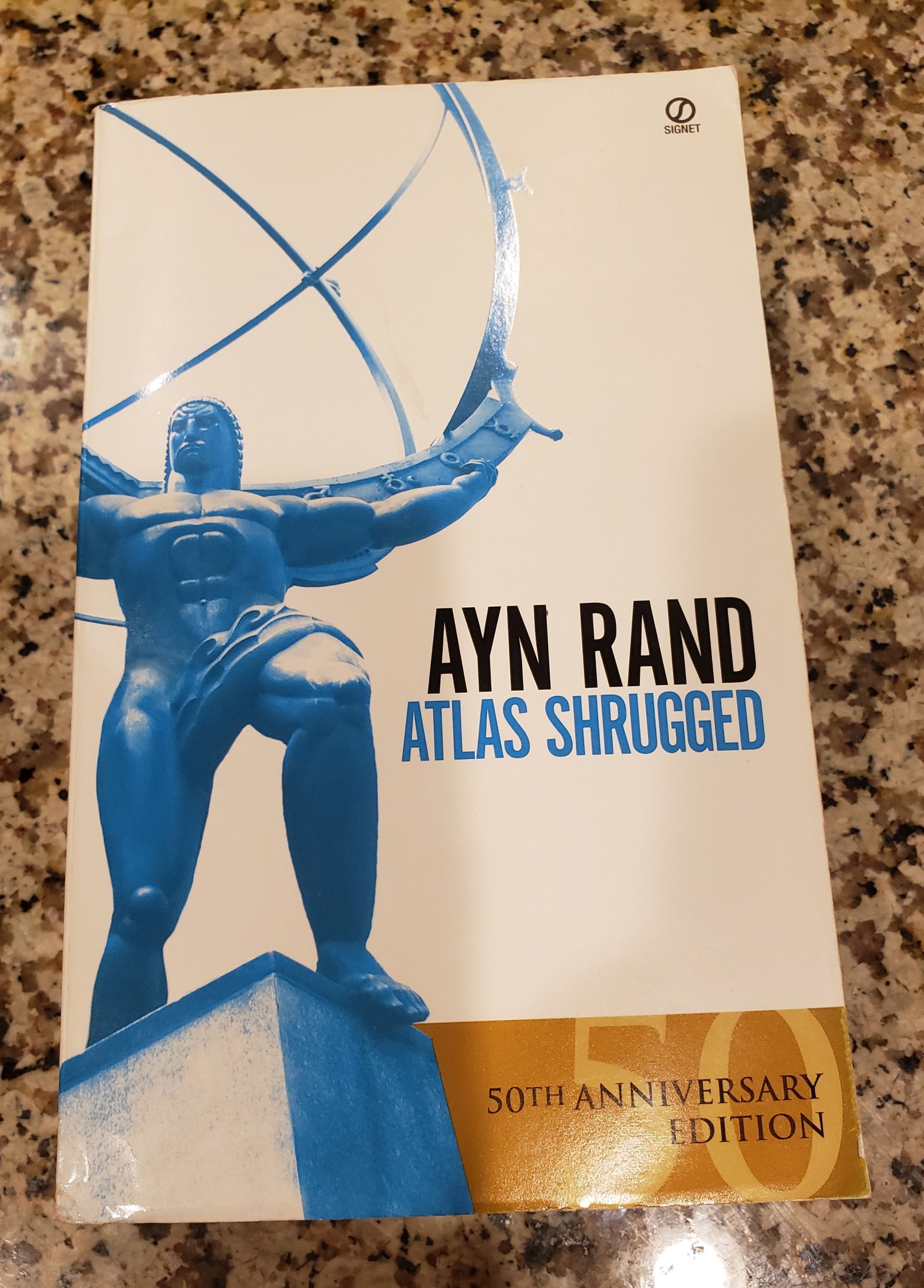
Atlas Shrugged

In 1991, the Library of Congress conducted a survey on reading habits and respondents chose the Bible as the book that made the most difference in their lives.

The second most influential book? Atlas Shrugged by Ayn Rand.

Atlas Shrugged was published in 1957, and is almost as long as the Bible sitting at a whopping 1088 pages. It is an investment of time, but in my opinion, totally worth it.

This is my second time reading Atlas Shrugged. The first was the physical copy of the book about 8 years ago. This second time was an audiobook.

As I write this, I’m trying to reflect on what I took from it that was meaningful and not some regurgitated conversation I’ve had on it in the past. Here’s a quick background and general synopsis (with little-to-no spoilers), after which I’ll move into some takeaways.

Ayn Rand

Ayn Rand was born in Russia in 1905 and lived through the Russian Revolution that brought Lenin and Communism to power. She lived through the early implementation of Communism and moved to the United States when she was 21.

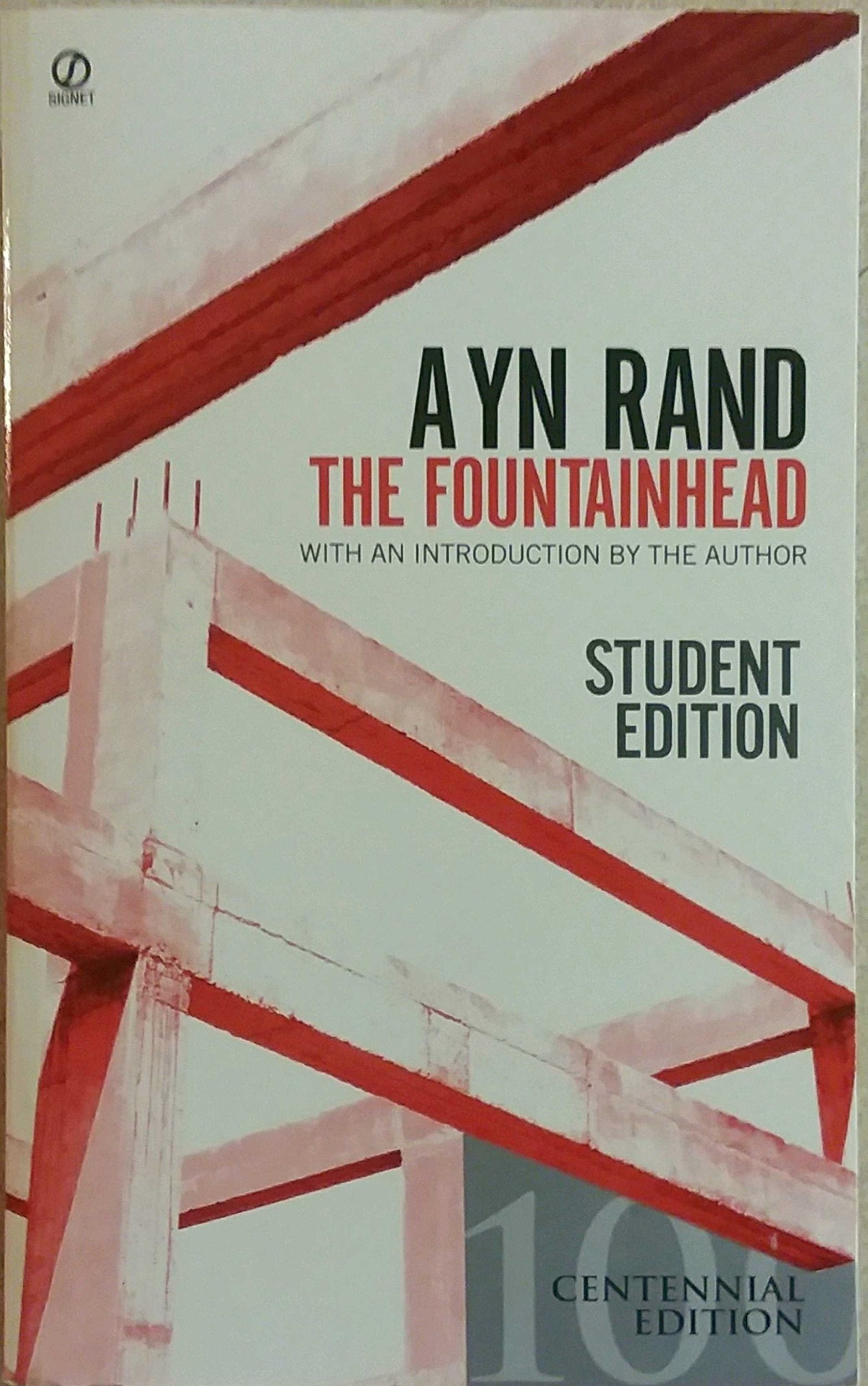
This may help explain why her novels are blatantly anti-communism/anti-socialism and pro-capitalism. She published the first of her more popular novels, The Fountainhead, in 1943. This is also a life-changing read and I may do a similar review on that later.

Karl Marx had a Communist Manifesto, well, Atlas Shrugged is Ayn Rand’s version of a Capitalist Manifesto, albeit in novel form.

Producers vs Looters

There are two main character types in Atlas Shrugged:
Producers and Looters.

Producers are those who live by the principle of “you reap what you sow.” They find joy, fulfillment, and purpose in the work, in the production, in the labor, and in the products of that labor. They are men and women of mental strength who know their purpose and accomplish that purpose without excuse or distraction.

These characters in the book are always sure of themselves and pretty much never waiver from their course of action. It leaves you feeling a bit insecure and wishing that you could have the cool, calm, and collected thought process that these characters possess. The producers always say the right thing in the right moment. They always make the correct, calculated action and remain 5 steps ahead of those who would oppose them.

The producers are the people who bring innovation and keep the world moving forward. They contribute their genius and products in exchange for money, which is the only honest form of currency.

Producers expect profits, wealth, capital, and growth because what they produce is genuinely better and will bring more benefit to the world in terms of better products, better living conditions, more jobs, and more wealth downstream.

Some of the main Producer characters: Dagny Taggart (railroads), Hank Rearden (metal), Francisco d’Anconia (copper and ore), and John Galt (energy). Yes, if you’ve ever heard the phrase, “who is John Galt” well, it comes from Atlas Shrugged and you’ll hear it a lot.

Looters are those whose form of currency is influence and governmental policy. They earn more power and money by forcing producers to sell at losses, make sacrifices for the common good, and use talents and products to benefit other looters (usually close friends of the looters).

They expect producers to comply with public policy and laws that make it illegal for producers to profit too much (or at all). They force producers to create for those within the political elite, who are friends with the right people, rather than for those who could use the products to create bigger and better things.

Looters use taxes, policies, production limits, exclusivity contracts, and the media to control production across all industries. They prop up their friends’ businesses by increasing the barrier to entry for those entering markets with superior products and services as well as allocating government money to fund their cronies and businesses that are substandard.

Looters don’t know what they want to produce in life, in fact, they don’t actually produce anything. Their real goal is to stop and/or destroy producers by exerting political and social power. Looters want to destroy, simply because they can, knowing that it will harm society as a whole while disguising their policies around the betterment of society and social justice.

Some of the main Looter characters: James Taggart (railroads), Dr. Floyd Ferris (state science), Wesley Mouch (lobbyist).

The 3 major speeches

You get three main speeches by three separate protagonists in Atlas Shrugged that, when strung together, seem to serve as a well thought out counter to anyone who is peddling communist or socialist policies. I’ll point out who gives the speech, where to find it in the book, and links to the speeches elsewhere on the internet.

Context is big here so be sure to read the whole book to understand why these are so meaningful.

  1. Francisco’s speech on Money
    Part II: Chapter 2
  2. Hank Rearden’s courtroom speech
    Part II: Chapter 4
  3. John Galt’s radio broadcast
    Part III: Chapter 7

Predicting the future

Atlas Shrugged describes a few things that remind me of our existing climate.

• Government-imposed mandatory curfews.
• Government economic policies that create massive layoffs.
• Government officials hiring protesters to incite violent riots to push a political agenda and encourage government seizure of certain means of production.

Just something to think about.

Romance

Ayn Rand’s romantic philosophy is… different than mine. Fidelity isn’t a value that characters care much about in both Atlas Shrugged and the Fountainhead. In fact (spoiler alert), if a character is married, they will sleep with someone else. Marriage isn’t the most encouraged societal ideal to Ayn Rand.

The female leads move from one protagonist to the other, and the male characters seem genuinely okay with it. Sex is almost transactional, but not in the exchange of money/prostitution sense.

For the protagonists, it is more of a “we think the same, accomplish incredible things, and have a mutual respect for each other so…” followed by clothes coming off and both reaching the climax of passion at the exact same time, every time.

For the antagonists, it’s a “let’s do this just to spite someone or because we can’t control ourselves.” No one leaves feeling very good about themselves and they are never “in-sync” if you know what I mean (or is it N’Sync?).

I mostly try to skim past the romantic scenes as they are just not my cup of tea.

Thoughts

As I read/listen to Atlas Shrugged, I find myself strongly agreeing with most and strongly disagreeing with some.

There are idealistic behaviors represented, with characters making what I consider to be unrealistic decisions. I get it, it’s a fiction novel, but still, everyone has a weakness, right? Well, not Ayn Rand’s heroes. Having said that, the resolve and 100% commitment to purpose that her protagonists posses inspire me to be more firm in my convictions.

There are many occasions where I find myself writing down sentences, paragraphs, and entire pages because characters express exactly how I feel about rewarding producers, the evil of looters, and the dangers of government officials overstepping their bounds, justifying overreach with lies in the media. I agree with the idea that human thought, hard work, and determination separate poor from average and average from great accomplishments.

The idea that lazy, corrupt, incompetent people will try to make things “fair” by robbing from the deservedly rich is something I see (and admittedly benefit from at times) all around me. “I want it, but can’t earn it, so because they have it and I want it, I deserve it and should be able to take it” basically sums it up.

Recommendation

I really enjoy reading this book, otherwise I wouldn’t have finished it (twice). I highly recommend it to people who are interested in economic systems, political policy, the viewpoint of someone who lived through and abhors communism while loving capitalism, and super-strange love interests.

This wraps up an over-simplified review of a massive, deep, impactful book. Atlas Shrugged is one of the most influential books I’ve ever read so, good job 1991 survey. The article about the survey is here.

You can purchase Atlas Shrugged here for super cheap and I earn like $0.02 if you do (yay!): Amazon.com

If it made you angry, guess what… you fell for it.

“If you want to control someone, all you have to do is to make them feel afraid.”

Paulo Coelho

I’m a marketing professional. Well… that’s a stretch… I’m in marketing. A profession that has a lot of potential for lies, deception, and (huge) exaggerations designed to grab attention and move people to action.

There are copywriting techniques, color theories, imagery strategies, and yes, psychological triggers.

Several studies have looked at what makes people interact with posts, videos, stories, and content in general. I won’t reference all of them, but at the end of this, I’ll link to a couple resources.

Here are the 5 emotions that spark the most interaction and sharing:
Anger
Anxiety
Awe
Excitement
Amusement (Humor)

Now… take a second to reflect on the articles/posts/tweets/videos that earn your interaction the most often.

Did they make you angry or outraged?
Did they make you anxious or afraid?
Did they amaze you?
Did they excite you?
Did they make you laugh?

Here’s another thing that I feel like we all know but forget to realize:
Content creators are paid on clicks, likes, comments, interactions, and time spent on their content.

That means if a headline or video thumbnail (the image that gives a preview to what the video has in it) can spark those emotions in you and get you to watch, read, and spend more time on a page, the creator gets paid.

The content doesn’t have to be accurate. It doesn’t even have to be true. It just has to get you to click and spend time on a website that is serving you ads that are designed to get you to click and spend more time on another website (and hopefully buy something).

The major content creators (think the media) are experts at eliciting these emotions and directing your behavior. The apps and websites you use everyday build a digital and psychological profile that knows you probably better than you know yourself.

Google, Facebook, Twitter, Instagram… they know what you search, they know what you click, they know what political party your agree with, and a whole lot more. And with this information, they sell your profile to advertisers so that these advertisers are more likely to sell you what they’re peddling. Whether that’s information, votes, clicks, or products.

This isn’t meant to make a stand on those companies. It’s just to point out the fact that we are influenced more than we know and it is oh so intentional.

I’m embarrassed to admit the things I have bought because of the next crisis. Food storage, guns, bug out bags, insurance, hand sanitizer, toilet paper… the list goes on.

Not all of these are bad, but I bought several of these out of fear or anxiety.

I’ve also purchased several other things because they made me laugh. Dollar Shave Club razors, Dr. Squatch soaps, and the Lawn Mower 2.0.
Some of these worked as promised… others, well, not so much, but the ads made me laugh. They made me feel like they were speaking to me, they understood me, I could trust them.

Great job marketing team.

Here’s the deal. There are travesties throughout the world. It seems as though several have happened recently and caused an uproar, and with many of the incidents we’ve seen, people are and should be outraged.

But here is where things get malicious in my mind.

Media outlets, whether mass media or small blogs (like this) piggyback on singular events to blow them up into more outrage-inducing pieces to keep the clicks and visits coming.

Watch the posts that come across your feeds. I’d be willing to bet that the posts you see contain content that shows someone you strongly disagree with saying something you strongly disagree with OR someone you strongly agree with saying something in response to something you strongly disagree with.

Before you believe that all liberals/conservatives are evil, before you believe that all cops are racists, or that all black people are rioters or looters, or that all [insert politically charged phrase] are something else, remember, someone is making money off of getting you charged up.

If you find that a much of what comes across your feed is making you angry, which makes you share/comment/follow, guess what… you fell for it.

Some studies to consider:

Facebook’s emotional contagion study
The book Contagion by Jonah Berger, Chapter 3: Emotion
The book Trust Me I’m Lying by Ryan Holiday

Changing your mind means you’re weak

At least, that’s what we’ve been conditioned to think.

“Hold the line.”
“Be consistent.”
“Don’t change your mind.”

Watch any political campaign and you’ll see mudslinging like, “this candidate once said this, but now says this.”

Or

“This candidate voted for this 24 year ago, but now voted for this.”

Because apparently changing your opinion on political and business issues means you don’t have a backbone, or you’re a flip-flopper, or you only say whatever you must in order to get ahead.

Do you really believe that stubborn, hard-headedness is the ideal? Because anytime we see someone change their mind, it is portrayed as a bad thing.

Do we really want to elect officials who never change their understanding?

Because, if so, there are a lot of politicians who believed some pretty wacky stuff 5, 10, 20, 30, 40 years ago.

Do we really want business leaders who never learn or adapt?

Because if so, there are a lot of business executives who believed some pretty wild stuff 5, 10, 20, 30, 40 years ago.

And specifically those businesses that refused to change their tune, adapt, or move (I’m looking at you Blockbuster, Circuit City, Radio Shack, TiVo…) are gone.

And it’s not only about believing wacky stuff, it’s the fact that the world was different all those year ago. It’s only been 13 years since the first iPhone was announced. Look at the advancements of culture, technology, religion, and global connectivity in 13 years. Things changed. People changed. You changed.

It is okay for you to reflect on your beliefs and adjust. It does not make you weak. In fact, it is a sign of strength and growth.

I have not always been right (although, I may not admit this to my wife, kids, or parents). I won’t always be right in the future. Is there a chance that on a particular topic, I am not 100% right in this given moment?

No.

I’m pretty sure this time…

And what is right? Guess what, on A LOT of issues, we have absolutely, positively – No. Clue.

“Right,” 60 years ago in America meant blacks had to sit at the back of the bus.
“Right,” 100 years ago in America meant women couldn’t vote.
“Right,” 1000 years ago (depending on which part of the world you lived in) meant child sacrifice, feudal lords, raping and pillaging.

Think about that for a minute.

And for those who are sure that their church/religion/belief system is “right” look at the history of your church. I’d be willing to bet it has changed A LOT since it was founded. I know mine has. And I’m glad that is the case.

Life right now is about making decisions based on our understanding, reflecting on how those decisions turned out, and adjusting accordingly.

When is the last time you gave yourself time to sit and reflect on your values and core beliefs?

Not reacting, but reflecting.
Not scrolling through the stories, posts, feeds, tweets, and shows that arouse you, anger you, or make you laugh, but unplugging to think.
Not disconnecting from reality in a game, but connecting with reality on a hike, on a chair in your back yard, or face to face with your spouse/kid/dog.

It’s much more difficult than it sounds.

Try it this week.

Turn off your phone, computer, and/or TV.
Go on a hike. Sit on your porch. Go for a drive (with the radio off) and reflect on who you are now and how you’ve changed throughout your life.

Then try to understand that in 10 years, as you look back on your current self, you may find that you’ll be embarrassed of your current self in some areas, and enormously proud of your current self in others.

Explore and embrace the possibility that right now, in this moment, you may have something to learn that you don’t already know, that you don’t yet agree with, or that you don’t quite understand.

If you think differently than me, I’ll unfriend you

I’m seeing this a lot lately given the existing climate.

Look, it’s social media, so you’re well within your right to connect with or sever connections with whomever you’d like. I just hope that when you demand that people who think differently than you be more open-minded, and then say things like the title of this post, you see the irony.

I am fortunate to have close friends (and family) who hold opposite beliefs to my own. And yes, they believe/post/say things that make me bristle or cringe sometimes.

One of my lifelong best friends stands on almost the exact opposite political side of pretty much every major issue than I do. We grew up together, played on teams together, and went to college together. While at college, we would go to lunch at least once a week and discuss these issues.

We’d walk across campus, observing people of all kinds of backgrounds, appearances, and behavior, which would often spark conversations on how we see the world. Rarely did we think exactly the same.

But here’s the beauty of it all. When I look back on our conversations and disagreements, they were free of the negativity you see on social media.

No name calling. No fighting. No unfriending. We would just talk. Like two adults. About issues we cared passionately about, and we’d share why we felt the way we did. We listened to each other and, while I don’t think either one of us changed the other’s mind, I understand a little better why some people relate to or believe things differently than I do (and it wasn’t because they are ‘evil’).

I’m fortunate enough to have other very close friends similar to the one mentioned above. We play on teams together. We work together. We hang out with our families together. When heated topics come up in the world, I call those on the opposite side, and we talk. I ask them to help me understand the side they tend to agree with. They listen to my side. It’s wonderful.

My opinions on life, love, religion, politics, work, and everything else have evolved dramatically after experiencing life. I don’t believe the same things I did as a teenager… or as a college student… or when I was a single person… or when I was married with no kids… or as a father of 1, 2, and then 3 kids… or as an entry-level employee…

As we experience more of life, many of our beliefs will change, and that’s okay.

Embrace friendships and connections with those who think differently than yourself and welcome conversations with them. The trick is, it is okay for people to think differently than you. They are not stupid/evil/uneducated/brainwashed just as you feel you aren’t any of those things.

Create conversations where you can both feel safe, where you can both feel heard, and where you can both try to understand without hate. After having a conversation with me where we don’t agree, who knows, maybe with a little reflection and life experience, I may start to believe the same thing you do (and vice versa).

Do we need core values to hold on to?
Yes, and I think they are surprisingly simple (and straight from the pre-school playground).

Be nice
Listen
Don’t hurt people
Don’t take their stuff
Say please
Say thank you
Share

Imagine where the world would be if we could just follow those 8 simple rules.

I won’t unfriend you for thinking or acting differently than I do, yes, even if I consider what you do or say to be terrible. And if you want to unfriend me for this, well, so be it.